
How to Choose the Right Hospital Furniture for New Hospitals in India
Starting a new hospital is one of the most capital-intensive and decision-heavy projects in the healthcare sector. Among all infrastructure choices, selecting the right hospital furniture directly impacts patient safety, staff efficiency, infection control, and long-term operational costs. Choosing hospital furniture for new hospitals in India requires a balance of clinical compliance, durability, ergonomics, and budget planning, especially within Indian regulatory and usage conditions.
This guide is designed as a practical, experience-driven resource to help promoters, administrators, and procurement teams make confident, future-proof decisions.
Understanding Hospital Setup Furniture Requirements in India
Before shortlisting vendors or products, it is essential to clearly understand hospital setup furniture requirements based on the type, size, and specialty of the hospital. A 30-bed nursing home, a multi-specialty hospital, and a tertiary care center all require different furniture planning.
Indian hospitals must account for NABH guidelines, workflow efficiency, patient load, and climatic conditions. Furniture should support infection control protocols, frequent cleaning, and heavy daily use. Poor planning at this stage often leads to premature replacement, higher maintenance costs, and compliance issues.
Key considerations include:
- Department-wise furniture mapping (ICU, wards, OT, emergency, OPD)
- Space optimization without compromising accessibility
- Compatibility with medical equipment and utilities
- Availability of spare parts and after-sales support
Hospitals that work with experienced hospital furniture manufacturers in India usually face fewer operational issues post-launch.
How to Choose Hospital Furniture Based on Functionality and Clinical Use

When evaluating how to choose hospital furniture, functionality should always outweigh aesthetics. Furniture must support clinical workflows rather than restrict them. For example, ICU beds should allow multiple position adjustments, while emergency trolleys must enable rapid access during critical situations.
Each department has unique needs. ICU and emergency areas require high-mobility, motorized solutions, while general wards may focus on patient comfort and ease of maintenance. Selecting inappropriate furniture often slows down staff response time and increases patient risk.
Hospitals should assess:
- Load capacity and adjustability
- Ease of movement and locking mechanisms
- Staff ergonomics and patient safety
- Compatibility with monitors, ventilators, and accessories
For critical care planning, reviewing options like ICU beds for hospitals and motorized seven function ICU beds from specialized manufacturers helps ensure long-term reliability.
Hospital Furniture Buying Guide: Materials, Durability, and Compliance
A practical hospital furniture buying guide must address materials and compliance, not just pricing. In India, stainless steel and powder-coated mild steel remain the most preferred materials due to durability and hygiene standards.
Furniture must withstand frequent cleaning with disinfectants without corrosion or structural damage. Weld quality, finish, and joint strength directly affect lifespan. Compliance with NABH and ISO standards is no longer optional, especially for hospitals seeking accreditation or government empanelment.
Hospitals should verify:
- Medical-grade materials and certifications
- Infection-resistant design and smooth surfaces
- Warranty coverage and service availability
- Manufacturer’s experience in healthcare furniture
Working with established brands like Aggarwal Surgicals, known for compliant and durable medical furniture for hospitals, reduces procurement risk significantly.
Hospital Furniture Selection Checklist for New Hospitals

Using a structured hospital furniture selection checklist ensures no critical item is missed during procurement. This checklist should be finalized before civil work completion to avoid layout mismatches.
Core furniture categories include:
- Patient beds
- Emergency and crash carts
- OT tables and instrument trolleys
- Bedside lockers and overbed tables
- CSSD carts and sterilization furniture
- Waiting area and OPD seating
For emergency preparedness, furniture such as crash cart trolleys and emergency trolleys must be standardized across departments to avoid confusion during critical moments.
A checklist-driven approach also simplifies vendor comparison and budget control.
Comparing Manual, Semi-Electric, and Motorized Hospital Furniture
Choosing between manual and motorized furniture is a common dilemma for new hospitals. Each option has a specific use case depending on patient volume and care intensity.
| Furniture Type | Best Use Case | Key Advantage | Limitation |
| Manual | General wards | Cost-effective | Staff effort required |
| Semi-Electric | Mid-care units | Balance of cost & comfort | Limited automation |
| Fully Motorized | ICU & critical care | Precision & safety | Higher initial cost |
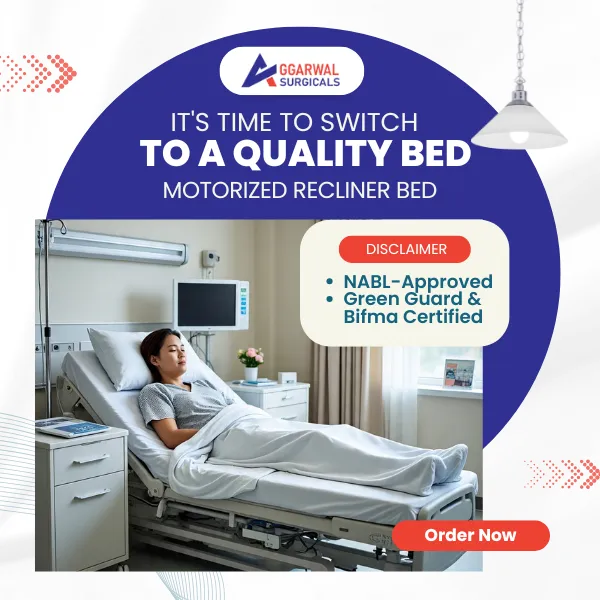
For hospitals focusing on advanced care, investing in motorized recliner beds for patients and automated ICU solutions improves both patient outcomes and staff efficiency over time.
Cost Planning and Vendor Selection in the Indian Market
Cost is a major factor when selecting hospital furniture for new hospitals in India, but it should never be the sole decision driver. Low-cost furniture often results in higher replacement and repair expenses within a few years.
Indian hospitals benefit from working directly with manufacturers rather than traders. Manufacturers offer customization, consistent quality, and better post-installation support. This is particularly important for hospitals planning expansion or NABH upgrades.
When evaluating vendors:
- Visit manufacturing facilities if possible
- Check past hospital installations
- Assess service response timelines
- Ensure scalability for future requirements
Reputed hospital furniture manufacturers in India provide long-term value rather than short-term savings.
FAQs: Choosing Hospital Furniture in India
What is the most important factor when selecting hospital furniture for a new hospital in India?
Clinical functionality and compliance with Indian healthcare standards should be prioritized over design or cost.
How much furniture planning should be done before hospital launch?
Furniture planning should begin during the architectural layout stage to ensure space compatibility and workflow efficiency.
Is motorized furniture necessary for small hospitals?
While not mandatory, motorized furniture in ICUs and emergency areas significantly improves care quality and staff efficiency.
How do I ensure furniture meets NABH requirements?
Choose manufacturers with NABH-compliant designs and request documentation during procurement.
Making the Right Choice for Long-Term Success
Selecting the right hospital furniture is a strategic investment, not a one-time purchase. By understanding clinical needs, using a structured buying approach, and partnering with experienced manufacturers, new hospitals can build infrastructure that supports safe, efficient, and scalable healthcare delivery.
If you are planning a new hospital or upgrading existing infrastructure, Aggarwal Surgicals offers end-to-end solutions in compliant, durable, and application-specific hospital furniture for new hospitals in India. Explore their complete range at https://aggarwalsurgicals.com/. The right furniture today lays the foundation for better care tomorrow.
Contents
- 1 Understanding Hospital Setup Furniture Requirements in India
- 2 How to Choose Hospital Furniture Based on Functionality and Clinical Use
- 3 Hospital Furniture Buying Guide: Materials, Durability, and Compliance
- 4 Hospital Furniture Selection Checklist for New Hospitals
- 5 Comparing Manual, Semi-Electric, and Motorized Hospital Furniture
- 6 Cost Planning and Vendor Selection in the Indian Market
- 7 FAQs: Choosing Hospital Furniture in India
- 8 Making the Right Choice for Long-Term Success