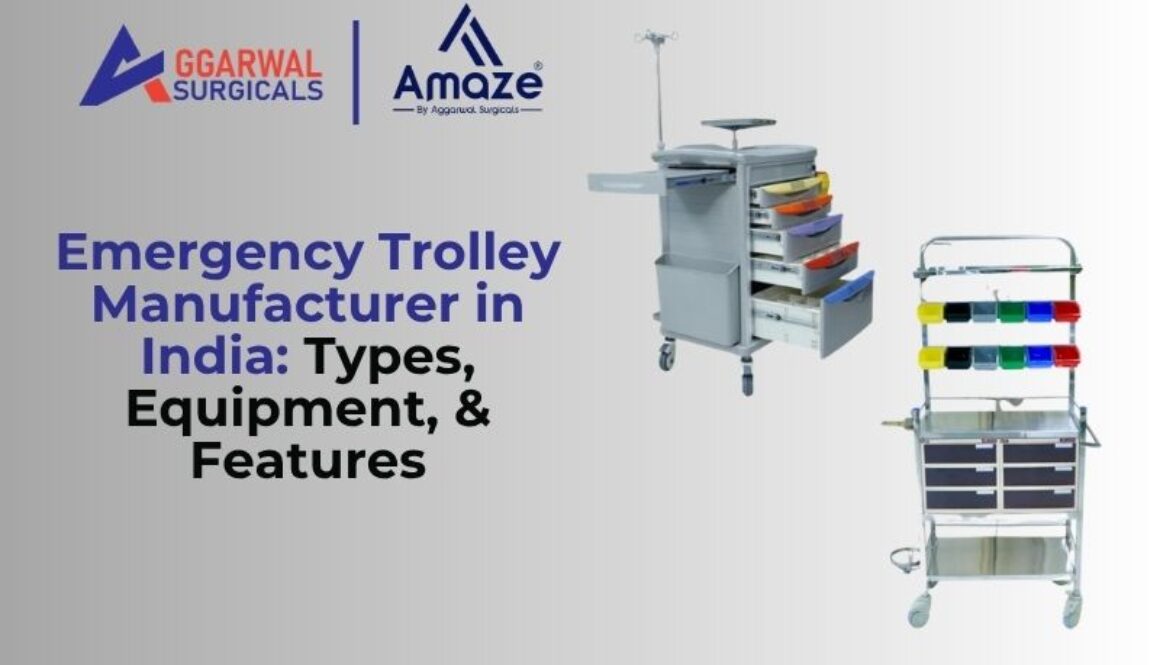
Emergency Trolley Manufacturer in India: Types, Equipment, & Features
When a medical emergency occurs, healthcare teams need immediate access to essential medicines, instruments, and resuscitation equipment. A well-organized Emergency Trolley in a hospital keeps these supplies accessible, supports rapid clinical response, and improves emergency preparedness.
For hospitals, ICUs, operation theatres, and emergency departments, choosing the right Medical Emergency Trolley is an important part of planning an efficient patient-care environment. Aggarwal Surgicals, a hospital furniture and emergency trolley manufacturer in India, offers emergency and crash cart solutions designed for healthcare settings.
What Is an Emergency Trolley in a Hospital?
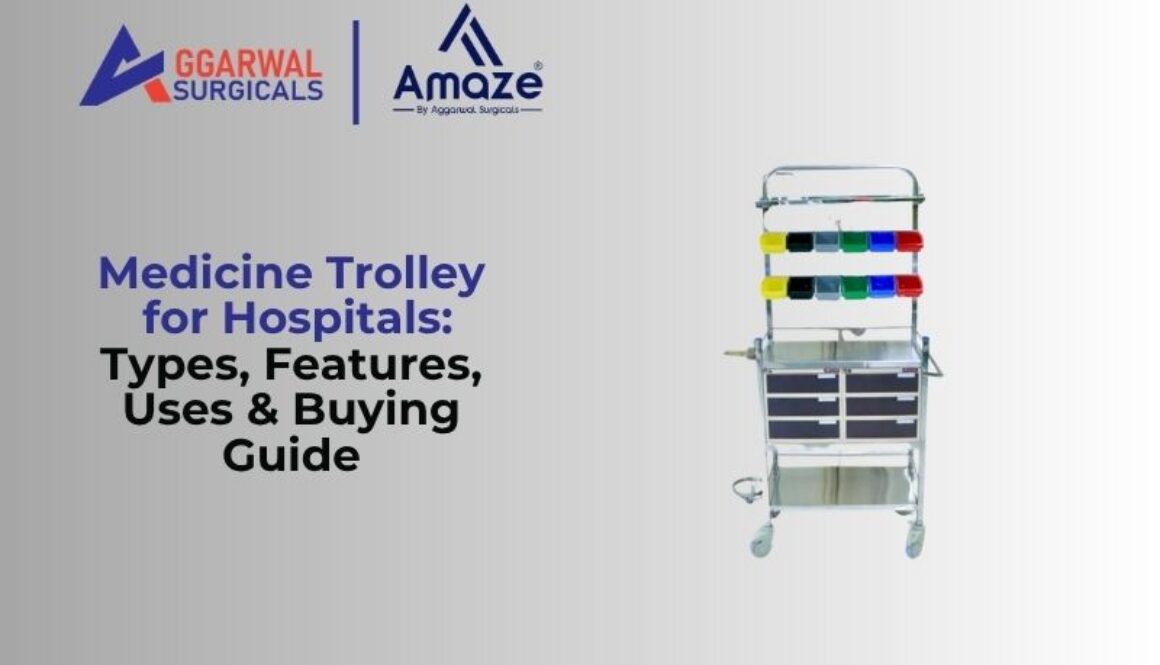
An Emergency Trolley is a mobile storage unit that organizes emergency medicines, medical instruments, and essential supplies needed during urgent patient-care situations. It typically includes drawers, shelves, castors, and other accessories depending on the model.
A Crash Cart Emergency Trolley is a specialized type of emergency trolley commonly used for resuscitation and other critical situations. Its purpose is to keep designated emergency supplies organized and readily accessible to trained healthcare professionals.
Types of Emergency Trolleys Used in Hospitals
Different departments require different trolley configurations based on their clinical workflows, available space, and equipment needs.
1. Crash Cart Emergency Trolley
A Crash Cart Emergency Trolley is designed to organize supplies used during resuscitation and other medical emergencies. It may include multiple drawers, an equipment platform, an IV pole, an oxygen cylinder holder, and a defibrillator mounting surface, depending on the model.
2. ICU Emergency Trolley
An ICU Emergency Trolley supports critical-care teams by keeping designated emergency medicines, airway supplies, and resuscitation equipment organized and accessible.
The trolley should be selected according to the ICU’s protocols, equipment requirements, and available bedside space.
3. Medical Emergency Trolley
A Medical Emergency Trolley is used across emergency departments, general wards, recovery rooms, and other clinical areas. Its storage configuration can help staff organize frequently required medical supplies for quick access.
4. Stainless Steel Emergency Trolley
Stainless steel models may be suitable for facilities that prioritize a robust construction and surfaces that can be cleaned according to the manufacturer’s instructions and hospital infection-control protocols.
Essential Emergency Trolley Equipment and Instruments
The Emergency Trolley Equipment stored on a trolley depends on the department, patient population, and hospital emergency protocols. Common categories may include:
- Resuscitation equipment: Defibrillator and associated accessories, where required
- Airway management equipment: Bag-valve masks, airways, and other designated supplies
- Emergency medicines: Medicines stocked according to approved hospital protocols
- IV access supplies: Cannulas, syringes, IV sets, and related consumables
- Monitoring equipment: Equipment for assessing patient vital signs
- Oxygen delivery accessories: Supplies appropriate to the trolley’s designated use
- Protective supplies: Gloves and other required personal protective equipment
The Emergency Trolley Instruments should be organized in clearly designated compartments. A trolley supports emergency preparedness, but it does not replace staff training, clinical protocols, or routine equipment checks.
Emergency Trolley Features to Look For
When comparing models, evaluate the design, storage capacity, mobility, and accessories rather than choosing based on appearance alone.
Important features include:
- Multiple drawers: For organized storage of medicines and supplies
- Smooth-rolling castors: To move the trolley between clinical areas
- Reliable brakes: To keep the trolley stable when parked
- Durable construction: Such as stainless steel or powder-coated metal, depending on the model
- Defibrillator platform: Where required by the intended clinical setup
- IV pole and oxygen cylinder holder: If needed for the department’s workflow
- Easy-to-clean surfaces: Compatible with the facility’s cleaning procedures
- Secure storage: Locking drawers or other arrangements for controlled access
- Accessory compatibility: Space for the equipment required by the hospital
The ideal configuration should allow healthcare professionals to locate supplies quickly without overcrowding drawers or compromising safe movement.
How to Choose an Emergency Trolley for Your Hospital
Before purchasing an Emergency Trolley, consider these practical factors:
1. Department requirements: An ICU, emergency room, and general ward may require different configurations.
2. Storage layout: Check drawer quantity, dimensions, dividers, and space for essential equipment.
3. Mobility and stability: Evaluate castors, brakes, manoeuvrability, and stability when stationary.
4. Material and maintenance: Select a construction suitable for the expected usage and cleaning procedures.
5. Accessories: Confirm whether you need an IV pole, oxygen cylinder holder, defibrillator platform, or additional storage.
6. Service and procurement support: For multi-unit purchases, discuss specifications, availability, delivery, and after-sales requirements with the supplier.
Why Choose Aggarwal Surgicals as Your Emergency Trolley Manufacturer in India?
Aggarwal Surgicals is a manufacturer and supplier of hospital furniture and medical equipment, serving healthcare facilities with a broad range of products for critical care, operation theatres, wards, and other hospital departments.
Its emergency trolley range includes products such as:
- Crash Cart Trolley
- Crash Cart-Cum-Emergency Medicine Trolley S.S. Deluxe (AS-141)
- Crash Cart-Cum-Emergency Medicine Trolley S.S. Ultra (AS-140)
- Bed Side Locker-Cum-Mini Crash Cart
These options help hospitals explore different emergency storage and trolley configurations according to their requirements. You can review the available range on the Aggarwal Surgicals Crash Cart & Trolley product page.
With more than 26 years of hospital furniture experience, Aggarwal Surgicals also offers a wider product range that helps healthcare institutions source multiple hospital furniture requirements from one supplier.
Looking for a Hospital Emergency Trolley? Get a Quote Today
Equip your hospital with an emergency trolley suited to your department’s storage, mobility, and equipment requirements.
Contact Aggarwal Surgicals today to discuss your specifications, select the right crash cart or ICU emergency trolley, and request a quotation. For new hospital projects, ward upgrades, or bulk procurement, share your required quantity and preferred configuration to get started.
Enquire Now | Request a Quote | Discuss Bulk Orders
Explore the emergency trolley and crash cart range and connect with Aggarwal Surgicals for your hospital furniture requirements.
Frequently Asked Questions
What is an emergency trolley used for in a hospital?
An emergency trolley organizes essential medicines, medical instruments, and emergency equipment so trained healthcare professionals can access them when required.
What is the difference between an emergency trolley and a crash cart?
An emergency trolley is a broad category of mobile medical storage units. A crash cart is specifically configured to support resuscitation and other critical emergency responses.
What equipment should an ICU emergency trolley contain?
Contents depend on hospital protocols but may include emergency medicines, airway supplies, IV access materials, monitoring equipment, and resuscitation accessories.
Which features are important in a medical emergency trolley?
Important features include organized drawers, smooth castors, reliable brakes, durable construction, easy-to-clean surfaces, and compatibility with required accessories.
Where can I find an emergency trolley manufacturer in India?
Aggarwal Surgicals manufactures and supplies hospital furniture, including crash cart and emergency medicine trolley options for healthcare facilities.