Electric Hospital Bed vs Manual Hospital Bed: Benefits, Features & Buying Guide
Choosing the right hospital bed directly affects patient comfort, caregiver convenience, and day-to-day clinical efficiency. Among the most common options, electric and manual hospital beds serve different needs, budgets, and care environments.
If you are comparing an Electric Hospital Bed vs Manual Hospital Bed, this guide will help you understand the key differences, benefits, features, and factors to consider before purchasing.
What Is an Electric Hospital Bed?
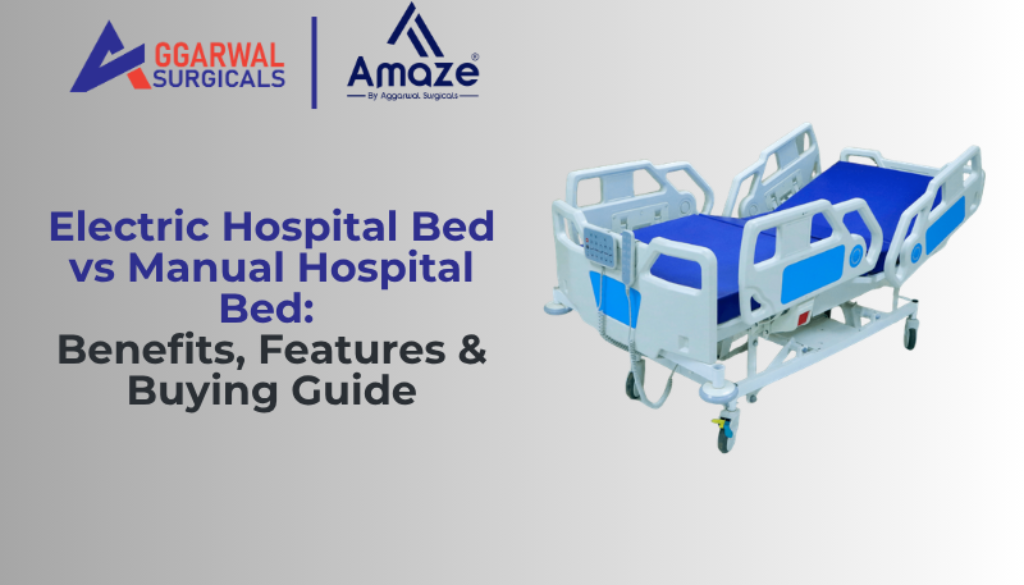
An Electric Hospital Bed is a motorized patient bed that allows caregivers or patients to adjust different sections of the bed using a hand controller. Depending on the model, adjustments may include the backrest, leg section, overall height, and other patient positioning functions.
Electric beds are particularly useful when patients need frequent repositioning or when caregivers need easier access during routine care.
Electric Hospital Bed vs Manual Hospital Bed
The main difference between an electric and manual hospital bed is how the bed’s positions are adjusted. Electric beds use motors and controls, while a Manual Hospital Bed generally uses hand-operated cranks.
| Feature | Electric Hospital Bed | Manual Hospital Bed |
| Adjustment | Motorized | Hand crank |
| Patient positioning | Easier and faster | Requires manual effort |
| Caregiver effort | Lower | Higher |
| Height adjustment | Available on many models | Depends on model |
| Power requirement | Yes | No |
| Maintenance | Requires motor/electrical servicing | Generally simpler |
| Initial cost | Higher | More economical |
| Ideal for | ICU, long-term and frequent-care patients | General wards and basic patient care |
The better option depends on your patient-care requirements, clinical environment, budget, and frequency of bed adjustment.
Electric Bed Benefits
An electric hospital bed offers several practical benefits, especially where positioning needs to be changed frequently.
1. Easier Patient Positioning
Motorized controls allow caregivers to adjust the backrest and leg section without manually operating a crank. This makes routine positioning more convenient.
2. Reduced Caregiver Effort
Nurses and attendants can make adjustments with minimal physical effort. This can be particularly useful in environments where beds are adjusted repeatedly throughout the day.
3. Better Patient Comfort
Patients can be positioned according to their comfort and care requirements. An adjustable backrest and leg section can provide more flexibility than a fixed hospital bed.
4. Adjustable Bed Height
An Electric Adjustable Hospital Bed with motorized height adjustment can make patient transfers and nursing procedures more convenient, depending on the model and clinical requirement.
5. Improved Clinical Workflow
Easy positioning can save time during routine care, examinations, transfers, and other bedside activities.
What Is a Manual Hospital Bed?
A Manual Bed uses mechanical hand cranks to adjust one or more sections of the bed. It does not require an electrical connection, making it a practical choice for hospitals and care facilities looking for a straightforward and economical solution.
Manual beds are commonly suitable for general wards, nursing homes, clinics, recovery areas, and basic hospital bed requirements.
They can also be a sensible choice where frequent motorized adjustment is not necessary.
When Should You Choose an Electric Adjustable Hospital Bed?
An Electric Adjustable Hospital Bed is worth considering when frequent positioning, caregiver convenience, and patient comfort are priorities.
It can be particularly suitable for:
- ICUs and critical-care areas
- Long-term patient care
- Elderly patient care
- Rehabilitation facilities
- Post-operative recovery
- Private hospital rooms
- Patients requiring frequent repositioning
For general ward requirements where adjustments are less frequent, a well-designed manual bed can provide a more economical solution.
How to Choose an Electric Bed
Before purchasing an electric hospital bed, look beyond the number of motors. The complete design should match your clinical requirements.
Consider these factors:
1. Number of Functions: Check whether you need backrest, leg, height, Trendelenburg, or other positioning functions.
2. Weight Capacity: Select a bed with an appropriate safe working load for the intended patient population.
3. Side Rails: Look for sturdy and easy-to-operate side rails that support patient safety and accessibility.
4. Castors and Brakes: Smooth-rolling castors with reliable brakes make repositioning and parking the bed easier.
5. Motor and Controller: Check motor performance, controller design, electrical safety, and availability of replacement components.
6. Mattress Compatibility: Ensure the mattress dimensions and specifications match the bed platform.
7. Service and Warranty: Reliable after-sales support is important for equipment containing electrical and mechanical components.
Here’s what many procurement teams miss: a hospital bed should be evaluated as part of the complete patient-care workflow, not simply by comparing its purchase price.
Why Choose Aggarwal Surgicals for Hospital Beds?
Aggarwal Surgicals is a trusted manufacturer and supplier of hospital furniture and medical equipment in India, with more than 26 years of experience in hospital furniture solutions.
The company offers different hospital bed configurations, including manual, semi-electric, electric, Fowler, and ICU beds, helping hospitals select solutions according to their clinical and operational requirements.
With a broader range of hospital furniture and equipment, Aggarwal Surgicals can also support hospitals, nursing homes, clinics, and healthcare institutions looking for a convenient single-source procurement partner.
Frequently Asked Questions
What is an electric
bed?
An electric hospital bed uses motors and a hand controller to adjust patient positions such as the backrest, leg section, and, on suitable models, bed height.
Is an electric hospital bed better than a manual bed?
Electric beds offer easier positioning and lower caregiver effort, while manual beds are more economical and do not require electricity. The right choice depends on the care requirement.
What are the main electric bed benefits?
Key benefits include easier patient positioning, reduced caregiver effort, adjustable height on suitable models, improved comfort, and greater convenience during patient care.
How do I choose an electric hospital bed?
Consider its functions, weight capacity, side rails, castors, motor quality, mattress compatibility, safety features, warranty, and after-sales support.
Where can I buy electric hospital beds in India?
Hospitals and healthcare facilities can source electric hospital beds from Aggarwal Surgicals, which offers multiple hospital furniture and patient-care solutions.
Ready to Upgrade Your Hospital Bed Setup?
Choose the right Electric Hospital Bed based on your patient-care requirements, facility needs, and budget.
Talk to the experts at Aggarwal Surgicals today. Share your bed requirements with our team and get guidance on the right configuration, specifications, and quantity for your hospital, clinic, nursing home, or healthcare facility.
Enquire Now & Get a Quote
Looking for bulk hospital beds for a new hospital, ward expansion, ICU, or healthcare project? Contact Aggarwal Surgicals today to discuss your requirements and get a suitable quotation.